HomeCareerBlogsThe journey is the destination – Network first
BlogEmployees speak out
The journey is the destination – Network first
As an IT architect, I have enough knowledge to understand business, data, application, and integration architecture, but I hadn’t yet mastered the backend. Nevertheless, I managed to convince a client for a new assignment that I could truly contribute as a solution architect for infrastructure. I’ve done things for the first time before, and thanks to my toolbox of knowledge and experience, I can quickly identify a problem and develop the right solution.
Learn all about infrastructure and get inspired by network technology
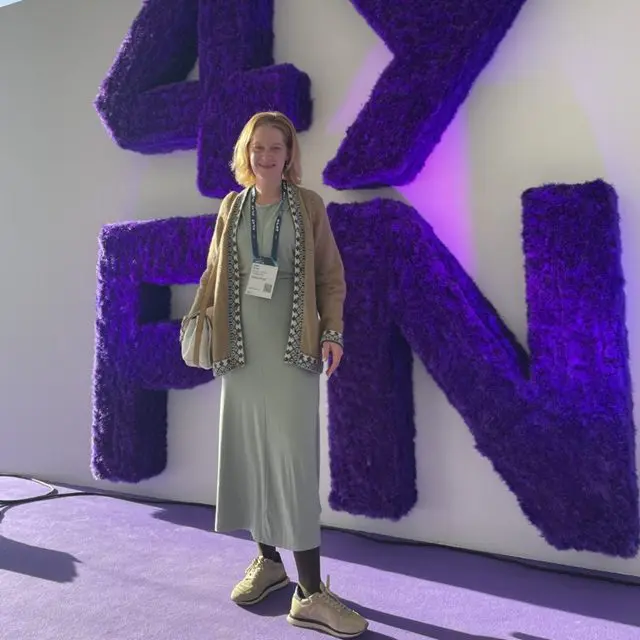
For this assignment, I had to learn everything about infrastructure quickly. The client required Azure knowledge. Therefore, I immediately started with the AZ-305 certification. Along the way, I quickly realized that networking is the most interesting topic in infrastructure, because many risks can arise with changes in the IT landscape. These risks must be made transparent and minimized. Because a full computer science degree or specific networking certifications only provide more knowledge, I went to the Mobile World Congress in Barcelona for network inspiration. Here, I learned more about the connection with security, demystified connectivity issues, and discovered network optimization with quantum and AI.
Applying knowledge and deriving a rule of thumb
Meanwhile, I had been assigned to the client’s network security team and developed product architectures for them, including firewalls, DDoS protectors, and email security gateways. Using practical case studies from the product architects and my acquired knowledge, I can now answer almost any connectivity question and offer suitable solutions. To make explicit knowledge about network technology reusable, in my view, it’s best to apply rules of thumb. Architecture calls this a principle, so I derived a “Network First” rule of thumb and principle to better answer connectivity questions myself without much experience in connectivity and also to validate my own acquired knowledge.
Learn all about network technology, establish a rule of thumb for addressing connectivity issues, and apply the “Network First” principle
There are few network specialists, but with a SIG on networking, you can also reach other colleagues
At CIMSOLUTIONS, you can contribute your knowledge to Competence Centers (CC) and facilitate special Internet Group (SIG) meetings for colleagues. I am a member of the Architecture Competence Center and earlier this year, as a joint force, I held a SIG meeting with colleagues from other Competence Centers about AI applications and the necessary architecture. For a “Network First” SIG, I managed to involve one of CIMSOLUTIONS’ most experienced network specialists. My colleague, Kees, has extensive knowledge and experience in networking and security and is a member of the Security CC. Together, we held a SIG on “Network First.” Kees and I tested the “Network First” principle and the rule of thumb against two practical examples and explained each concept and principle. Thanks to our storytelling approach, all listeners were able to follow our explanation without prior knowledge. We first explained the problem based on a case study, then offered the solution using a rule of thumb/principle, and then substantiated its feasibility with a second case study. Along the way, and afterward, we answered fun and interesting questions together and concluded that the journey is the goal – Network first!
If you’d like to make a difference and help CIMSOLUTIONS’ clients, apply now for one of our open positions.
Catrin Niesel IT Architect
Also interesting
Blog
From raw data to business value – Medallion Architecture
The Medallion Architecture, also known as the Multi-Hop Architecture, has received a lot of attention in CIMSOLUTIONS' knowledge-sharing sessions over the past year. This architecture forms the foundation of modern data platforms for a growing number of organizations.
Current AI news is mainly dominated by generative AI and Large Language Models (LLMs). Although these models deliver impressive performance, they also have their limitations.
Quantum computers can perform complex calculations and analyses many times faster and more efficiently than the traditional computers we work with every day.
As friendly as “hello world” sounds, it can be so naive when people decide on the basis of these “hello world” examples whether a technique or service can also be used to solve their own “real world” problems.